

You don’t always need funds to buy a business. Charles Skinner explains how he structured the sale of a business to an associate that left them both very happy – and proved lucrative for each later down the line
There are certain situations where you don’t actually need any money to buy a business. And I’m giving an example here where I was a very happy vendor and the buyer was even happier: he bought a business without putting up any money and sold it a few years later for over £10 million.
Usually in these situations you need some favourable conditions such as:
- You’re buying a company in a market where there are more sellers than buyers.
- The vendor is looking for a way out rather than to extract as much money as possible.
- You have the skill set to grow an undermanaged business.
- You have the drive to work hard, take tough decisions and get things to work.
- There are some assets in the business.
So, here’s the case in point and the circumstances are not as rare as you might think. I had come in to run Restore. We had many underperforming businesses, lots of debt and one real gem – the records management business, which is why I was there. In the course of my first year, I managed to sell off a fairly chunky business (£30m revenues) to a competitor. I had also closed a huge loss-making business despite onerous contracts with a couple of customers. I had sold a loss-making business to a competitor for £1. Apart from the business I wanted, I was left with the UK’s largest timber treatment and damp-proofing businesses. It was just about breaking even, had no logical buyers and wasn’t a huge hassle but it clearly didn’t fit with the rest of the company and I didn’t have the management or cash resources to sort it out.
Six months after I had gone in, I was called by a highly effective CFO for a buccaneering entrepreneur. He had seen his boss make a lot of money while he did most of the work. He’d correctly identified the orphaned status of the timber and damp business. Would I sell it to him? I replied that the revenues of £10m and the possibility that one day it might make money enabled me to put in some aggressive projections which would buy me time from our bankers. Would he pay me enough to keep them off my back? As I expected, he said that he’d take it off my hands for free. So, there was no deal. He rang back a couple of weeks later. He’d noticed I didn’t have a CFO – I couldn’t afford one but was very stretched and this was putting unfair pressure on our group financial controller. He would be happy to join as a part-time CFO. I admired him and this became a very happy arrangement for the next couple of years as we got out of the trenches and started to build something, in no small part thanks to his commercial practicality.
After that couple of years, he said I could now afford a full-time CFO and he still wanted to buy the outlier business. Sad as I was to lose him, I recognised that (a) I needed a full-time CFO, (b) he wanted to have his own business, and (c) the business, now making £400k per annum in profits was still an outlier. So, we agreed on a price of £4m.
At the time, I didn’t get involved in how he was going to fund it. He asked me to defer £1.5m to be paid off at £0.5m a year. I trusted that I would get the money and was happy with this. With revenues of £12m, the debtor book stood at £3m. He then borrowed £2m against that through invoice discounting. There was a shabby freehold in there which he borrowed £0.3m against. I’m pretty sure that the rest came from improving the working capital, aggressively chasing debtors and stringing out payments to the chemical suppliers. I’ve never asked him but I don’t think he put up a penny. The story ends very happily for all concerned.
This was the last step in the turnaround of Restore and our investors recognised that we were now a focused and effective business. Our share price moved up 30% over the next few months. And the deferred payments were met.
“If a vendor trusts the buyer and their capabilities, deferred payment often works”
Spirit of the relationship
And there was a particularly nice ending. Four years and eight months later, my former CFO rang me. I’d put in a “no embarrassment” clause on the sale of the business such that Restore would receive a payment from him if he sold it within five years. This was on a sliding scale, with our percentage of sale proceeds declining as time went on. Therefore, in year 5 we were entitled to 10% of the value over £4m. The company was now firing on all cylinders and he had received an offer of £14m from a corporate who saw significant synergies in acquiring it. He could easily delay the deal by four months and pay us nothing, or we could compromise. I’d honestly forgotten about the clause so thanked him and said £500k, rather than £1m, for us would be marvellous. The deal was done, he cleaned up and we got £500k out of nowhere. Subsequently he rang me: “Delighted to send you the cheque. Thanks for compromising on the fee. I was in a difficult position as, actually, for a different reason I’d changed the ownership of the company. Legally I knew I didn’t have to pay you but thought it was in the spirit of our relationship.” And that from one of the toughest CFOs I’ve come across.
There are several lessons from this example. The CFO had brought four of the many elements into play relevant to those who want to buy a business but do not have the funds:
- If a vendor trusts the buyer and their capabilities, deferred payment often works.
- Much of the banking for small companies is not real banking. They can lend money secured on the debtors, knowing that they are first in the queue if things go wrong – and they are going to get paid by collecting the moneys owed by the people who have secured the goods or services.
- If there are capital assets such as freeholds, you can borrow against them.
- The CFO made sure all debtors paid promptly and some creditors were asked to hold off a bit. A good CFO understands how to get idle working capital to work.
If you worry about the obligations that these create, and that any money you put up will disappear if you fail to sort out these undertakings, buying a business without much or any money probably isn’t for you. This would be a shame – as all the models suggest that a half-decent effort will generate stunning returns.
About the author
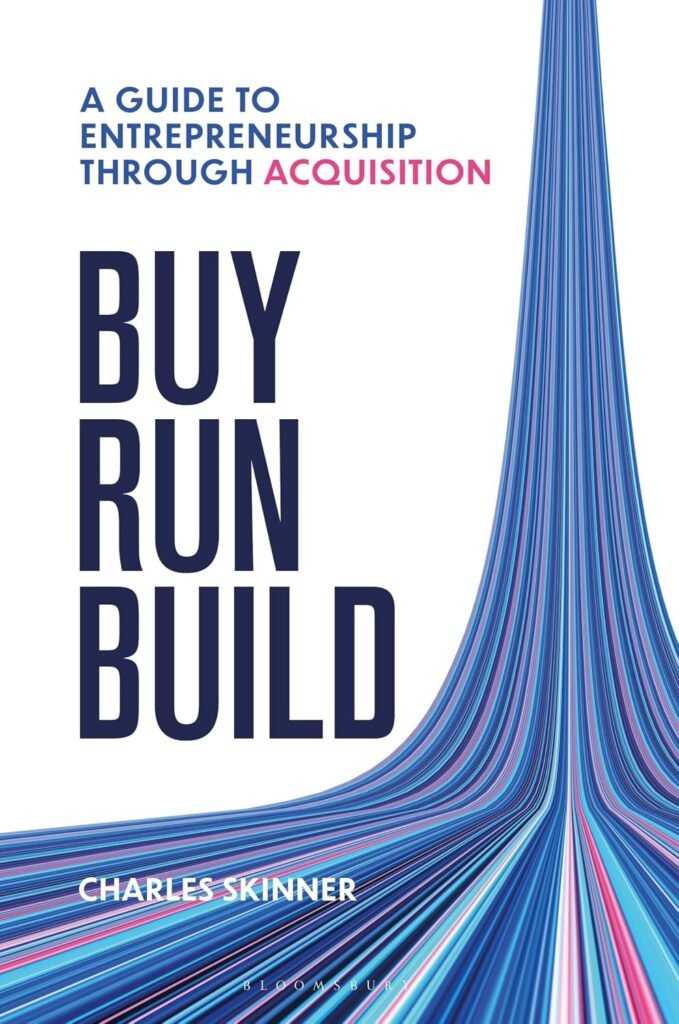
Charles Skinner is an industry specialist in Entrepreneurship Through Acquisition and is the author of Buy, Run Build: A Guide to Entrepreneurship Through Acquisition, which is shortlisted for the 2026 Business Book Awards.