

The five per cent of organisations capturing value from AI are not deploying tools faster – they are redesigning how work gets done, says Stuart J. Green
A chief executive showed me her board pack: five AI pilots and a 12% margin target by 2026. I asked which pilots she had been inside, which workflows she had walked, which decisions the AI was now making. She paused. She had not been inside any of them.
The pilots were running. She was reporting on them. She did not understand them.
This is the gap beneath the data. BCG’s 2025 Widening Gap study found that only 5% of firms are capturing material value from AI. Sixty per cent are reporting minimal revenue or cost gains despite substantial investment. McKinsey’s March 2025 global survey shows the same pattern, with around 80% of organisations reporting no material EBIT contribution from generative AI. Across both, the strongest predictor of value is not investment, talent or model selection. It is redesign of the work itself. AI is the heat. The fire is the operating model.
The category error
Most CEOs are running a familiar playbook: approve pilots, distribute them across functions, track progress, report to the board. It is governance designed for cyclical technology upgrades.
The five per cent are doing something different in kind. They are not inserting AI into the existing model. They are designing a new one. The unit of design is no longer a human team supported by tools. It is a human-agent system, where decision rights, accountability, judgement and execution are distributed across both.
When AI enters an operating model, it does one of two things. It compounds what works, or it accelerates what does not. In hierarchical models, AI compresses analysis but not authority. In manual-execution models, it lifts productivity within tasks but leaves the queues between them untouched. The bottleneck shifts rather than disappears. These are not technology failures. They are failures of diagnosis. The model was already misfitted to its conditions. AI makes that misfit visible, faster than leadership can ignore.
“The five per cent are doing something different in kind. They are not inserting AI into the existing model. They are designing a new one”
Why resilience is the wrong frame
When results underperform, boards default to resilience. The instinct is to hold the line and wait for recovery. That approach assumes a baseline worth restoring. Under structural disruption, the baseline has already moved.
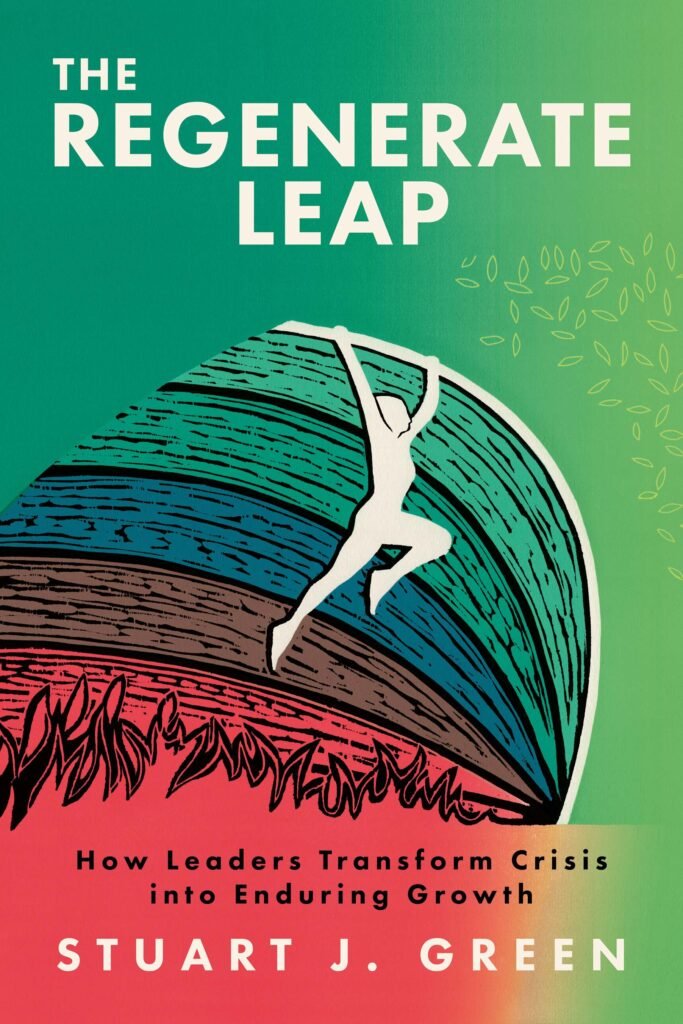
The appropriate frame is regeneration. In The Regenerate Leap I set out regeneration as a three-phase sequence for organisations operating under conditions that will not return to a prior baseline: RAZE, ENRICH, GROW. Each phase is a discipline, not a stage, and the order carries the logic.
RAZE strips away operating assumptions that no longer hold, including the assumption that all decisions default to humans. ENRICH builds the substrate: governance that defines how decisions are distributed between humans and agents, data that is clean and continuously available, trust calibrated with human oversight where the stakes warrant it. GROW designs the next organisation from the work itself, not from the org chart that used to do it.
The order is not optional. ENRICH on an obsolete substrate produces investment without structural change. GROW without RAZE designs the next model on a foundation that cannot carry it.
Five questions a Steward board asks
Boards and CEOs are not always reading the same instrument. A recent Pearl Meyer survey of 108 directors and executives found 100% of directors believed their senior team functioned as a cohesive unit. Only 66% of C-suite executives agreed. Ninety per cent of boards said responsibility for AI strategy belonged with the C-suite, yet the C-suite itself splintered four ways on who actually owns it. Misalignment at the level of diagnosis creates misalignment everywhere else.
A Controller board approves pilots and tracks margins. A Steward board asks different questions. Before the next AI investment is approved, these five belong on the agenda.
- Which decisions does AI currently own in this organisation, which does it augment, and which remain exclusively with humans? Who has verified that mapping?
- Which operating assumptions in our current model were designed for conditions that have since moved?
- What does our CEO understand directly about the AI workflows we are governing, not by report but from inside the work?
- How do we know whether our AI investment is compounding disorder or reducing it?
- What in our existing operating model are we prepared to stop, before we approve what comes next?
If those answers are not clear, the outcome is predictable. Spending without value.
The structural decision comes first
The five per cent is not a story about technology adoption. It is a story about diagnosis. The structural decision comes first. The technology decision follows. In that order, value appears. The fire is here. The leap is a choice.
The Operating Model Fitness Index scores structural fitness across the dimensions that determine whether AI investment compounds value or compounds disorder. CEOs and board chairs who score it together hold the same picture of the operating model before they approve the next pilot. That is the precondition for the conversation this article is calling for.
About the author
Stuart J. Green is founder of Blue-Green Advisors and author of The Regenerate Leap (2026). He developed the Operating Model Fitness Index, a scored diagnostic of structural fitness for CEOs and boards designing the next operating model, which is available here.