

The ability to learn fast from mistakes has moved from cultural nicety to strategic necessity, and compassionate leadership can help pave the way, writes business facilitator Melisa Buie
Here’s a pattern you’ll recognise. Despite massive investment in leadership development and learning programmes, people still make the same mistakes. They miss warning signs. They fail to pull lessons from setbacks. The problem isn’t talent. The problem is the environment. We’ve built cultures where learning from failure is something we discuss but rarely do. For leaders navigating constant disruption, understanding why this situation happens and what compassionate leadership can do about it is a strategic advantage.
Why aren’t people learning from mistakes?
The barriers run deep. At the most basic level, fear runs the show. When people believe that admitting errors will stall their career or put their job at risk, they get creative, not about solving problems, but about hiding them. Mistakes are buried, downplayed, or pinned on someone else. The learning never happens.
Then there’s the discomfort factor. Reflecting on failure means confronting our limitations, sitting with the unpleasant reality that we got something wrong. In a work culture wired for quick wins and positive reinforcement, that kind of productive discomfort is almost extinct. We’ve built systems that push people to move past failure as fast as possible instead of leaning into it, which ultimately hinders personal growth and the opportunity to learn from mistakes.
Speed worsens it. Donald Schön’s work on reflective practice showed us that “reflection-in-action” and “reflection-on-action” are how real expertise develops. Today’s business environments treat reflection as a luxury. Teams sprint from one initiative to the next, with quarterly targets and weekly sprints consuming every hour. When every moment demands measurable progress, reflection is the first casualty. Mastery doesn’t come from applying theory to problems; it emerges from the ability to reflect before, during, and after action, constantly refining our understanding through experience. Learning from mistakes must be a daily practice.
Even when people have the time, they often lack the skill. How do you analyse what went wrong without spiraling into self-criticism? What frameworks separate systemic issues from individual errors? Without structure, reflection turns into unproductive worry or surface-level analysis that misses root causes.
And then there’s blame. Amy Edmondson demonstrated that organisations undermine their own capacity to improve when they focus on identifying the responsible party instead of learning from failure. Blame creates powerful incentives to hide mistakes, dodge responsibility, and avoid the very conversations that generate insight. In these environments, learning from mistakes is difficult and actively punished, leading to a culture where employees are discouraged from sharing failures and insights that could foster improvement.
“Blame creates powerful incentives to
hide mistakes”
Compassionate Leadership: Empathy + execution
Compassionate leadership changes the equation. But let’s be clear what compassion means: it’s not soft, permissive, or an excuse to lower standards. It’s a deliberate integration of empathy and execution, empathy with backbone.
Empathy means genuinely understanding what failure feels like. Compassionate leaders know that mistakes trigger shame, anxiety, and defensiveness. That understanding paves the way for open discussions about the mistakes made, free of the judgment that hinders learning. It means acknowledging that fear of failure is rational in most organisations and that creating safety requires sustained effort.
But empathy alone isn’t enough. The execution side keeps standards high while changing how failure is processed. Compassionate leaders still expect results, hold people accountable, and make hard calls when performance doesn’t improve. The key distinction is that they separate the individual from the issue at hand. They treat mistakes as data about systemic gaps, not character flaws to punish. Susan Ashford’s research confirms it: reflective practices let leaders be simultaneously demanding and supportive.
Jacinda Ardern demonstrated this balance as New Zealand’s Prime Minister. Her crisis leadership proved that acknowledging difficulty, expressing care, and making tough decisions were completely coherent. In business terms, it’s the leader who says, “I know this is hard. I see your effort. We still need to solve this. Let’s figure it out together.”
The backbone ensures compassion doesn’t slide into enablement. Compassionate leaders set clear expectations, provide resources, and trust their people to deliver. When mistakes happen, the focus shifts immediately to learning, not blame. This builds psychological safety, the belief that risks won’t bring punishment or humiliation. Edmondson is clear: psychological safety doesn’t emerge on its own. Leaders build it by inviting dissent, modeling fallibility, and responding constructively to bad news.
Compassion as competitive advantage
If you’re wired to evaluate through competitive advantage and bottom-line impact, here’s the case: compassion isn’t a perk; it’s a driver of strong performance.
Start with innovation. Organisations that learn from mistakes iterate faster, experiment more boldly, and out-innovate competitors still stuck punishing failure. In an economy where innovation drives competitive advantage, not execution of known processes, this is critical. When people feel safe taking risks, asking hard questions, and admitting what they don’t know, you get better ideas faster.
Then there’s retention. High performers won’t stay in environments built on fear and blame. They want organisations where they can learn, grow, and take intelligent risks without career-limiting consequences. Compassionate leadership cuts turnover and attracts top talent.
Performance gains go beyond innovation and retention. When people feel safe, they share information more freely, flag problems earlier, and collaborate more effectively. In any industry where small oversights cascade into major failures, this transparency delivers direct bottom-line value.
Pennebaker’s research on expressive writing shows that articulating difficult experiences produces measurable physiological and psychological benefits. When organisations create structured time for reflection, they’re supporting wellbeing and enhancing cognitive function, reducing absenteeism, and improving decision-making. The business case for compassionate leadership rests entirely on performance.
“Don’t wait for quarterly reviews. Embed brief learning moments into every day”
Strategies for encouraging growth and reflection
How does this work in practice? Below are six strategies that embed reflection and learning in how organisations operate:
Build a safe-to-fail culture – This is foundational. A safe-to-fail culture doesn’t mean lowering the bar; it means raising the expectation that people will experiment. Teams run small, bounded experiments as routine. When something doesn’t work, the response isn’t punishment, derision or blame; it’s curiosity. What did we learn? What do we try next? Leaders signal this by celebrating experiments regardless of outcome. Standing still is riskier than trying something and learning from it.
Make micro-reflections daily –Don’t wait for quarterly reviews. Embed brief learning moments into every day. Instead of asking “what did you learn today?” (too passive), ask “what experiment did you run today, and what did you learn?” That framing normalises experimentation and ties learning directly to action. Five-minute team debriefs built around that single question generate more insight than occasional deep dives. Ashford’s research confirms it: frequency beats duration when it comes to reflective practice.
Use empathy mapping – Borrowed from design thinking, this exercise asks leaders to consider what their team members are seeing, hearing, thinking, and feeling when they confront failure. This approach moves beyond generic solutions to address actual barriers. Fear of a specific manager’s reaction? No time for reflection? No frameworks for analysis? You can only fix what you have diagnosed.
Run post-mortems and pre-mortems – Post-mortems, done after a project, create space to examine what happened without the pressure of immediate decisions. When facilitated properly and focused on systems rather than individuals, post-mortems produce actionable insights. Pre-mortems take a different approach: before a major initiative, the team is asked to envision a spectacular failure and then work backward to identify causes. Research shows this improves planning quality and gives people permission to voice concerns without looking like they’re undermining morale.
Encourage expressive writing – Based on Pennebaker’s research, this technique gives people a private, structured way to process mistakes and extract lessons. Spend 15–20 minutes writing continuously about a challenging experience, focusing on thoughts and feelings, not just facts. The research shows it improves both psychological well-being and cognitive function. Leaders should allocate time for this as part of professional development, not something squeezed into personal time.
Adopt shared ownership models – When teams share accountability for outcomes rather than pinning responsibility on individuals, the dynamic around mistakes shifts fundamentally. Failure becomes a collective learning opportunity, not an individual catastrophe. This doesn’t eliminate individual accountability; it creates a primary layer of team-based ownership that removes the fear from personal failure.
The path forward
When systems reward blame over learning, speed over reflection, and heroics over collective growth, learning from mistakes becomes impossible. Build environments where compassionate leadership makes learning possible, or watch talented people repeat preventable errors while competitors pull ahead.
The path forward pairs structural changes, time and processes for reflection, with cultural shifts led by leaders who model vulnerability and curiosity. Balance empathy with execution. Cultivate psychological safety. Treat mistakes as data and experimentation as routine. That’s how organisations learn at the speed the market demands.
The question isn’t whether to invest in compassionate leadership. It’s whether you can afford not to. When adaptability determines who wins, the ability to learn fast from mistakes has moved from cultural nicety to strategic necessity. Organisations that get this right will have something their competitors lack: a workforce that treats setbacks as fuel and mistakes as a teacher.
About the author
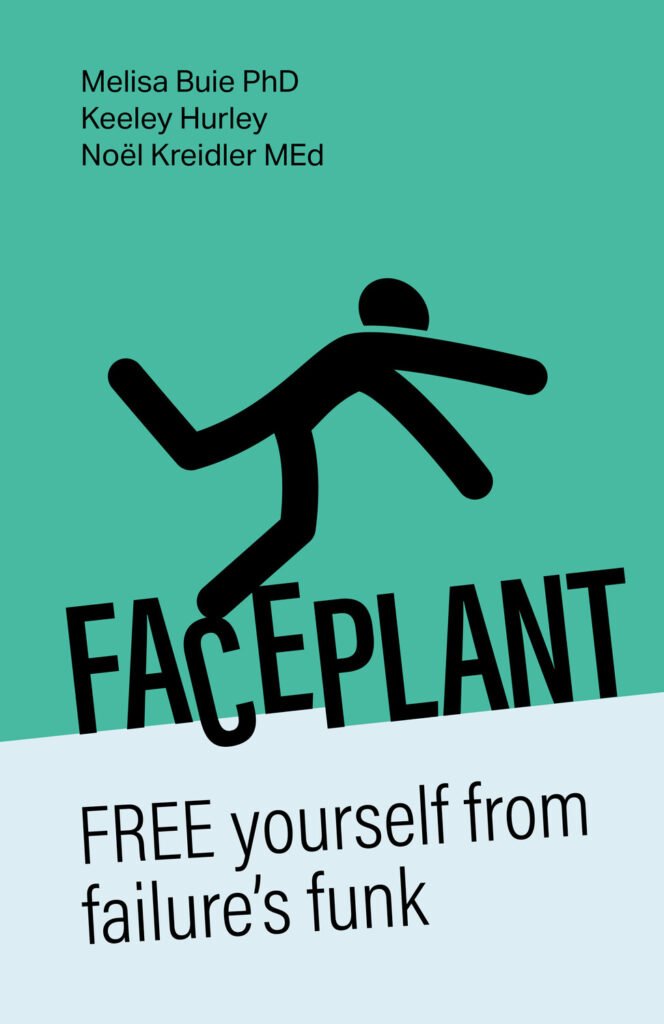
Dr Melisa Buie is the co-author of Faceplant: FREE Yourself From Failure’s Funk, and a speaker, facilitator, and organisational strategist with 30+ years of experience in industry, government and academia.