


History’s great strategic thinkers prove that strategy isn’t about theory, it’s about behaviour, and impact follows those who practise a certain approach, writes Charlie Curson
Senior leaders often assume strategy is about intellect, information, or industry expertise. But history’s greatest strategists – across fields as diverse as civil rights, science, sport, politics, exploration and business – reveal something different. Their advantage wasn’t innate genius. It was behaviour. Often subtle. Often invisible. Always deliberate.
Here’s the truth about great strategy: strategic excellence isn’t a rare talent, it’s a set of repeatable behaviours. Strategy connects awareness with choice, which enables action, which leads to impact. And the best leaders in history mastered behaviours that strengthened each link in that chain.
Below are seven hidden behaviours shared by the world’s most effective strategists – and a few pointers as to how modern leaders can adopt them.
Zooming out before zooming in
Strategists are, amongst other things, perspective shifters. They resist the instinct to act immediately. Instead, they step back, widen the lens, and understand the broader system they’re operating within.
I have to start with Katherine Johnson, the NASA mathematician behind the trajectory calculations for Apollo missions. Katherine Johnson never saw “the numbers” – she saw the whole mission architecture, from orbital mechanics to political symbolism.
Nelson Mandela is another excellent example of someone who zoomed out on short-term emotions in order to protect long-term stability, famously prioritising reconciliation over revenge. Having recently met two people who had the honour of meeting him, their first-hand stories reflect these behaviours.
And having just recorded a podcast with a former world champion kick boxer, I am also drawn to Musashi, the undefeated Japanese swordsman, who taught that to win a duel you must first understand “the way of all professions” i.e. the wider context, not the strike alone. So, let’s look at what behaviour you might adopt to emulate these greats. First, before any decision, ask: what’s the system I’m really operating in? By defining the following you will move instantly from operator to strategist.
- Your stakeholders – including the less obvious
- The incentives
- Any known constraints
- The time horizons
- Any second-order consequences
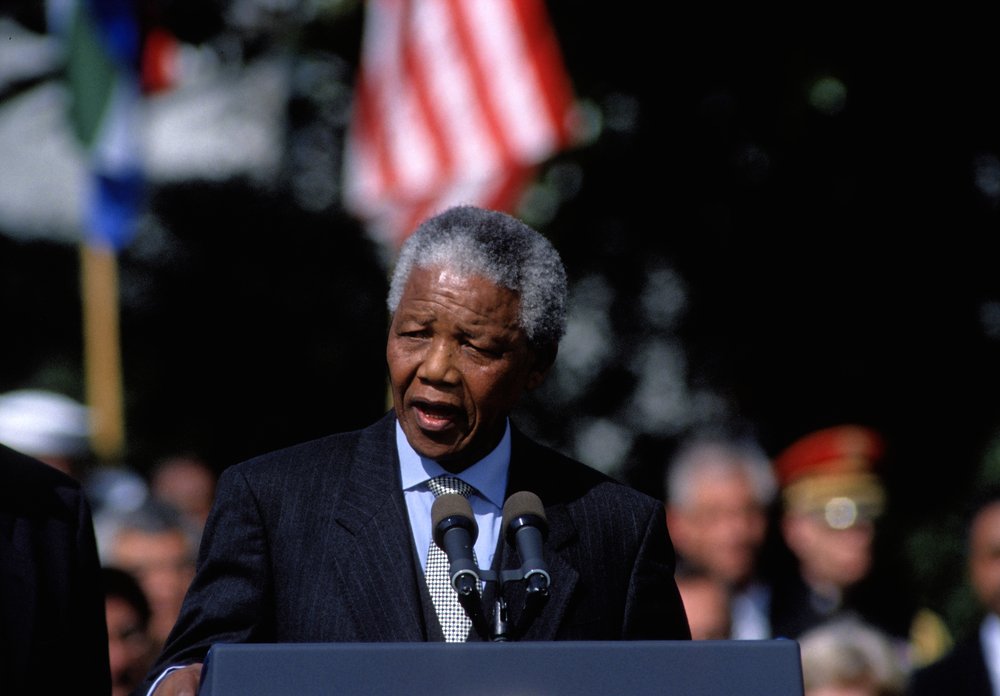
“Nelson Mandela zoomed out on short-term emotions in order to protect long-term stability”
Challenging assumptions others never think to question
Strategists aren’t satisfied with inherited logic. They interrogate the invisible rules holding organisations back. John Boyd, one of the most influential military strategists of the last century, taught pilots to survive by rewriting assumptions faster than opponents using his now-famous OODA Loop (Observe–Orient–Decide–Act).
Body Shop founder Anita Roddick questioned the assumption that business success required conformity. Instead, she redefined how values, activism and commerce could coexist. Yvon Chouinard, Patagonia’s founder, is a more modern equivalent, arguably challenging the assumptions about capitalism, not just products and markets.
Back to NASA, Mary Jackson was their first black female engineer. She famously challenged both technical and social assumptions, pushing NASA into more inclusive and effective problem-solving.
What behaviour might you adopt?
In my book Be More Strategic I encourage the transformative strategic question: what must be true for this to work? And then its powerful twin: what might not be true? This destroys stale thinking and opens new pathways.
Using curiosity as a weapon, not a trait
Great strategists aren’t passive learners. They use curiosity to disrupt patterns, uncover blindspots and generate breakthrough ideas.
Ada Lovelace didn’t just understand Charles Babbage’s Analytical Engine; she asked the curious question: “What else could this machine become?” In so doing, she conceptualised modern software a century early. Ben Francis, founder of Gymshark, built a £1bn brand by obsessive curiosity about community behaviour, content trends, product tweaks and athlete culture. Music producer Rick Rubin filters genres through curiosity, not expertise, helping artists find their strategic creative edge.
What behaviour might you adopt?
Curiosity becomes strategic when it is:
- Proactive, not reactive
- Intentional, not random
- Structured, not scattered
Each day, try asking five questions for every answer you give, and you’ll soon learn that curiosity compounds.
Rehearsing the future before anyone else sees it
Strategists think future-back. They imagine what the world might look like and work backwards to shape it. JFK’s challenge to land a person on the Moon by the end of the 1960s created a shared mental model of the future long before the technology existed (politics aside).
Jeff Bezos, Amazon’s founder, operated with a 7-year time horizon, forcing Amazon to make decisions today that only made sense in the world of tomorrow. Serena Williams and her long-time coach Patrick Mouratoglou mapped future scenarios obsessively. This was more than just shots – it was psychological states, crowd energy and opponent behaviours.
What behaviour might you adopt?
Use this prompt from my Be More Strategic framework: what will be true in 3–5 years that is not true today? And then ask: if that were true, what would I do differently right now? This shifts you from passive forecasting to active shaping.
Making decisions using subtraction, not addition
One of the least visible behaviours of great strategists is relentless prioritisation through subtraction. They cut noise, reduce options, and simplify the playing field. Steve Jobs famously cut Apple’s product line by 70% on his return – a strategic act of focus that saved the company. LEGO’s CEO, Jørgen Vig Knudstorp, slashed the number of active products in 2004, and killed non-core ventures – keeping the business alive.
Abraham Lincoln created his Team of Rivals not by adding voices, but by subtracting ego and emotion from political conflict. Former Chairman and CEO of PepsiCo, Indra Nooyi, reportedly used a “stop-doing list” as rigorously as a to-do list, eliminating non-strategic projects to protect capacity. If you were to try anything, try this. It’s simple yet effective.
What behaviour might you adopt?
At least once a month ask: what are we going to stop doing? This way you’ll discover that real strategy is about choices, and choices always involve saying no.
Protecting emotional clarity under pressure
Strategic thinking collapses when emotional regulation collapses. The greatest strategists maintain composure that protects clarity.
Take the courageous Rosa Parks, who’s quiet courage was not spontaneous; it was the product of deep internal mastery, enabling strategic action that altered history. Ernest Shackleton’s emotional leadership transformed a doomed Antarctic expedition into the greatest survival story ever told, through calm, empathy and focus. Satya Nadella, Microsoft’s CEO, shifted the company’s culture by modelling emotional intelligence and curiosity at scale.
What behaviour might you adopt?
Try these three micro-practices from the “Master Emotions” chapter of my book. They will help you learn that emotionally regulated leaders make better long-term decisions.
- Name it to tame it – label the emotion explicitly.
- Shift the vantage point – review the situation as if advising a friend.
- Return to intent – remind yourself what outcome truly matters.
Tell strategic stories that move people
Strategy is useless unless people act on it. Great strategists influence through narrative. Muhammad Yunus, founder of Grameen Bank and father of microfinance, didn’t pitch financial mechanics – he told stories about dignity and human potential.
Gene Kranz, NASA’s Flight Director during Apollo 13, used crisp, compelling storytelling under extreme stress to coordinate thousands of decisions in real time. Jacinda Ardern used clarity and humanity to mobilise a nation through crisis.
What behaviour might you adopt?
When presenting strategy, ensure your narrative answers four questions. This will help you understand that story creates alignment. Alignment creates action. Action creates impact.
- Where are we now?
- Where are we going?
- Why does this matter?
- What will we do next?


Bringing it all together: The 12 Practices of Strategic Mastery
Each behaviour sits neatly inside the four levels of my Strategic Mastery framework:
Level 1: Deepen Self-Awareness – Master emotions like Rosa Parks, Ernest Shackleton, Jacinda Ardern. Challenge your own underlying assumptions like John Boyd and Anita Roddick
Level 2: Cultivate Open-mindedness – Develop Relentless curiosity like Ada Lovelace and Rick Rubin. Listen deeply to the system, like Nelson Mandela and the great swordsman Musashi
Level 3: Develop Strategic Capabilities – Be future-focused and imaginative like JFK, and be comfortable with uncertainty like Serena Williams and Jeff Bezos.
Level 4: Lead Impact at Scale – Develop decisiveness through subtraction like Steve Jobs, and influence through narrative like Muhammad Yunus and Gene Kranz. Each level moves from inner game to outer game, building strategic capacity that compounds over time.
The real lesson from the great strategists
None of these individuals waited for permission, resources or a perfect moment. They built behaviours that helped them see more clearly, choose more wisely and act more courageously. In a world shaped by AI, volatility and accelerating change, these behaviours are no longer optional. They are the essential toolkit of the modern leader. And crucially, they are learnable.
If there is one conclusion leaders should draw from history’s greatest strategists, it is this: strategy is not brilliance. Strategy is behaviour. Behave strategically, and impact follows.
About the author
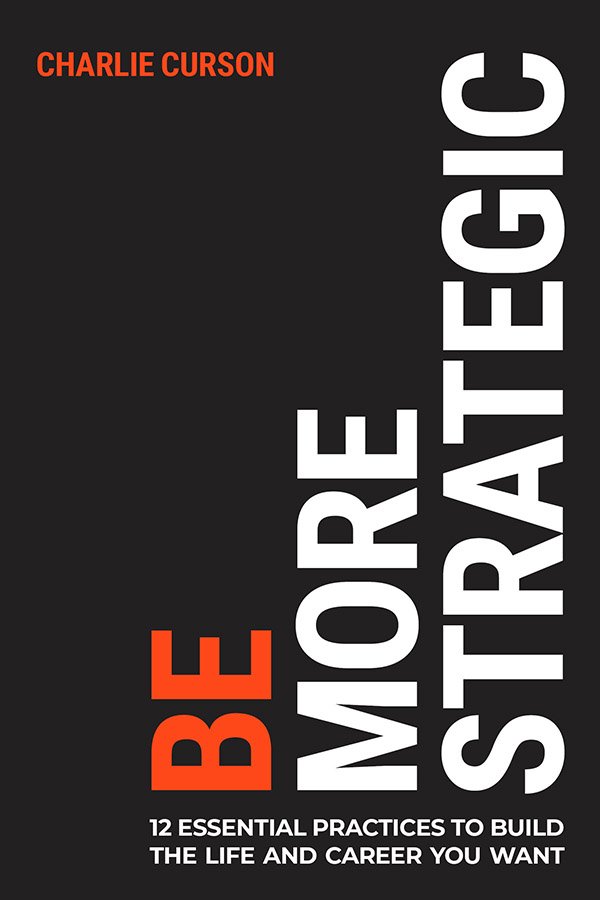
Charlie Curson is a strategic advisor, accredited leadership coach and the author of
‘Be More Strategic: 12 Essential Practices for the Life and Career You Want’. He advises founders,
leaders and teams on strategy, leadership and growth, and is an angel investor in early-stage businesses.

Further reading
This article was first published in Business 5.0.
All images © Shtterstock.com